

The Chicken Road bonus isn't just another multiplier chase—it's a high-stakes survival challenge where timing, nerve, and bankroll discipline decide whether you walk away with a win or vanish in a puff of feathers. Unlike traditional crash games that rely on pure exit timing, the Chicken Road battle mode introduces dynamic obstacles, enemy patterns, and escalating risk that demand more than just luck. This guide breaks down exactly how the bonus works, what the real odds are, and how to approach it without blowing your bankroll in seconds.
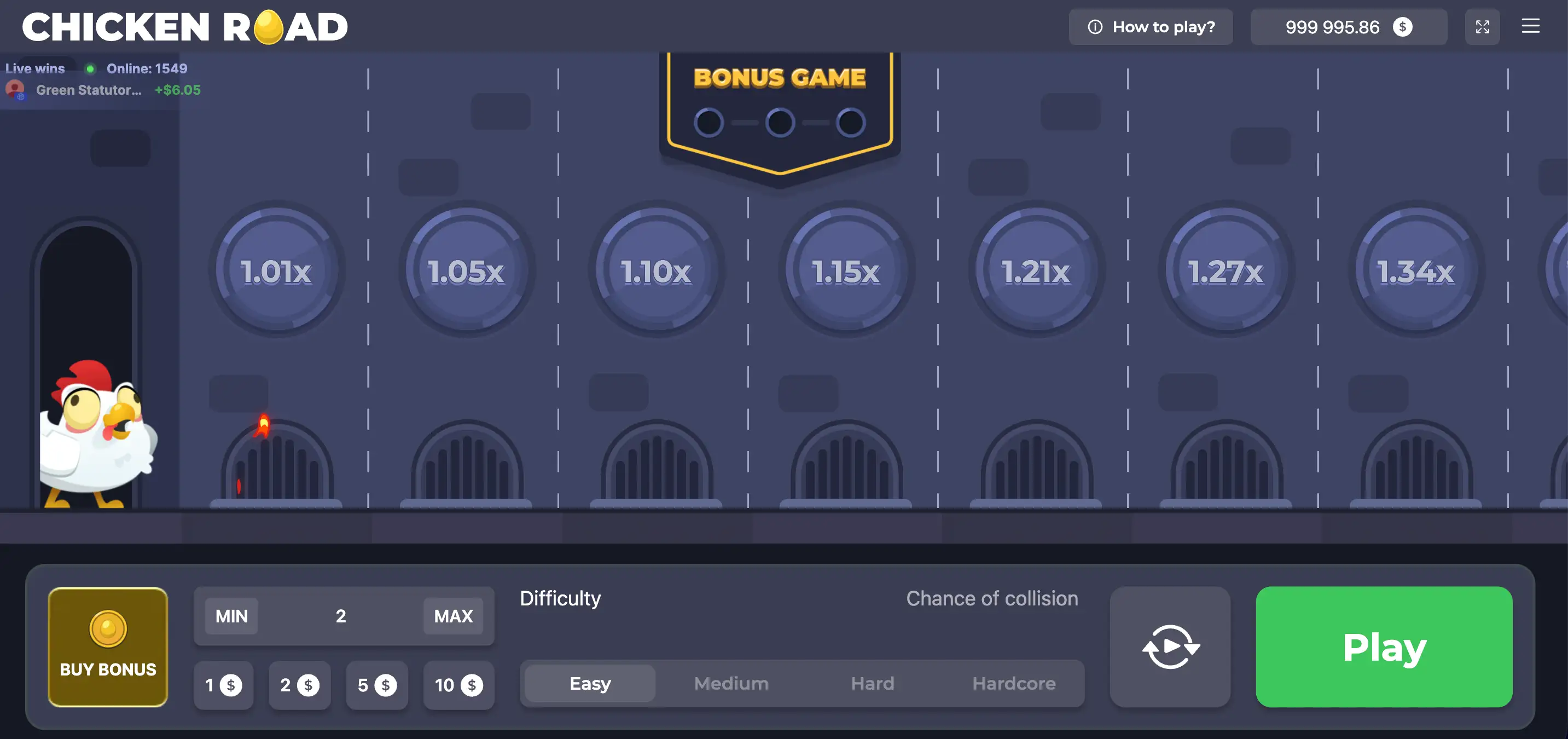
The Chicken Road bonus activates after triggering the feature during base gameplay—usually by landing three or more scatter symbols. Once inside, you enter a side-scrolling "battle" sequence where your chicken avatar must cross a treacherous road filled with moving cars, logs, and other threats. Your goal: survive as long as possible. Every second you stay alive increases your bonus multiplier, which is applied to your triggering bet.
This isn't passive watching. While you can't directly control movement in most versions, the game uses pre-scripted enemy patterns with randomized timing. The longer you last, the higher the multiplier—but the density and speed of obstacles ramp up dramatically after the 5x–10x mark, making survival exponentially harder.
Crucially, the bonus is a single, non-interactive sequence. You trigger it, watch it play out, and receive your payout based on how far you got. There's no "cashing out" mid-bonus—unlike true crash games—so your entire risk is locked in the moment the feature starts.
The Chicken Road bonus uses a time-based multiplier tied to survival duration. Here's a typical progression across different difficulty levels:
| Survival Time | Multiplier Range | Frequency | Typical Outcome |
|---|---|---|---|
| 0–3 seconds | 1x–3x | Very common (~60%) | Low value, often below stake |
| 4–7 seconds | 4x–8x | Moderate (~25%) | Break-even to small profit |
| 8–12 seconds | 10x–25x | Rare (~10%) | High-value win |
| 13+ seconds | 30x–150x+ | Extremely rare (<5%) | Jackpot-level payout |
Based on aggregated data from similar mechanics in crash and arcade-style slots, the average return per bonus trigger is typically below the game's base RTP. Why? Because high multipliers are so rare that they don't offset the frequency of low or zero payouts. For example, if the base game has 96% RTP, the bonus feature alone might return closer to 85–90% due to its high volatility and "all-or-nothing" design.
This means: triggering the bonus doesn't guarantee profit. In fact, most bonus rounds end with sub-5x returns—enough to feel like a win, but often less than your total stake across triggering spins.
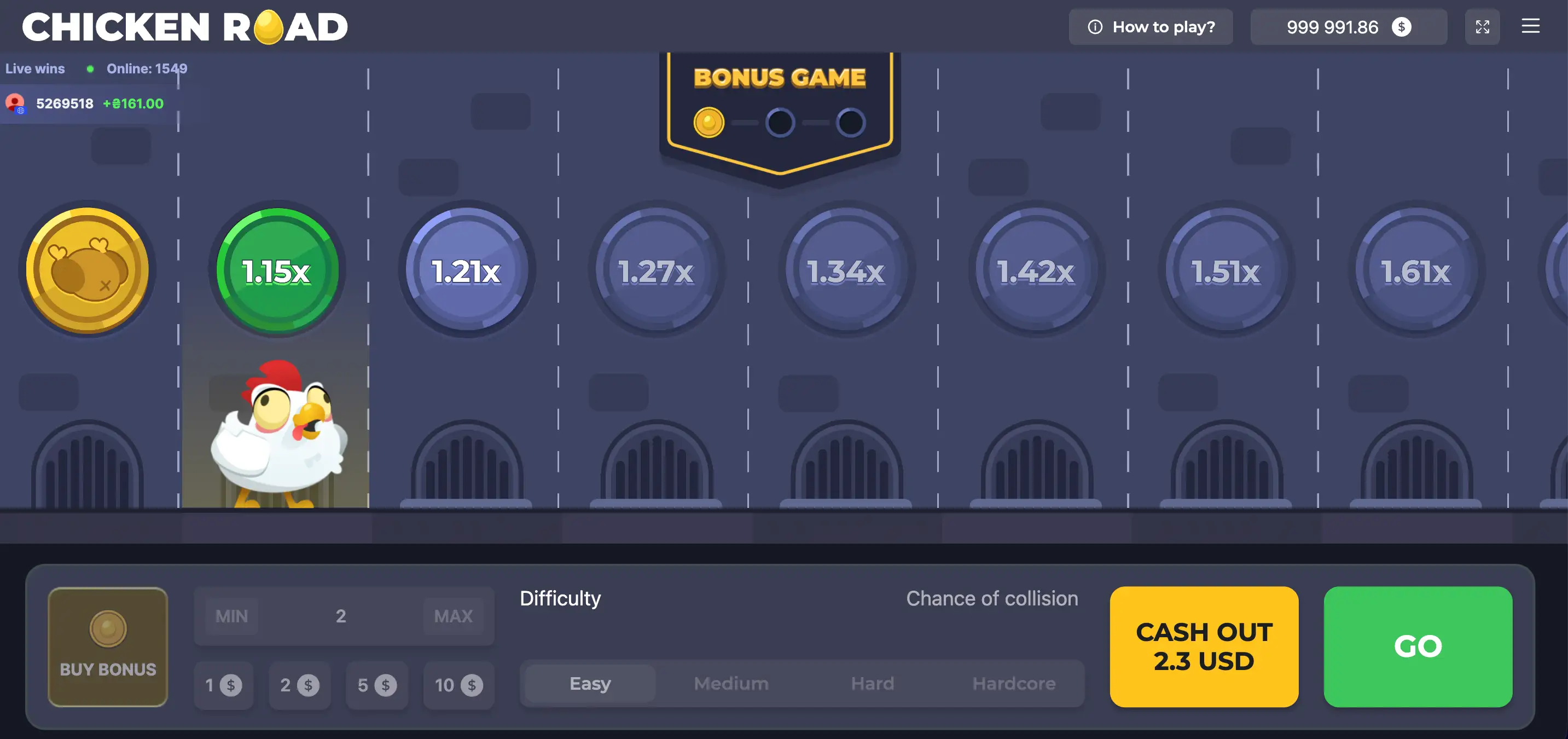
| Level | Total Steps | Starting Multiplier | Max Multiplier | RTP | Recommended For |
|---|---|---|---|---|---|
| Easy | 24 | x1.02 | x24.5 | 96% | Beginners, low-risk players |
| Medium | 22 | x1.11 | x2,254 | 88% | Balanced risk-reward seekers |
| Hard | 20 | x1.22 | x52,067 | 80% | Experienced high-risk players |
| Hardcore | 15 | x1.63 | x3,203,384 | 60% | Extreme volatility hunters only |
Notice the inverse relationship between potential max win and RTP. Hardcore mode offers astronomical multipliers but returns only 60% long-term—meaning you'll lose 40% of your stakes over time. Easy mode is far more sustainable for extended play sessions.
Because the Chicken Road bonus is high-volatility and non-interactive, your only real control lies in your pre-trigger bankroll management. Here's a disciplined approach:
Decide in advance how much you'll spend trying to trigger the bonus (e.g., $100 maximum). Never exceed this amount in a single session.
Use a consistent stake (e.g., $0.50–$1.00 per spin) to normalize your cost per trigger attempt. Avoid increasing bets after losses.
Don't chase endlessly. Cap your hunt at 150–200 spins per session. If you haven't triggered by then, take a break.
If it takes 120 spins at $0.80 to hit the bonus, your trigger cost is $96. If your return is 15x ($12), you're down $84 overall.
In Easy/Medium modes, consider setting auto cash-out at 5x–10x to secure consistent smaller wins rather than gambling for rare multipliers.
Remember: every spin is independent. Past failures don't make a bonus "due." The RNG doesn't track your losses. Chasing after 200 spins without a hit usually leads to deeper losses, not a breakthrough.
| Pattern Type | Easy Mode | Medium Mode | Hard/Hardcore | Survival Tips |
|---|---|---|---|---|
| Single lane traffic | Every 2–3 tiles | Every 1–2 tiles | Continuous waves | Most common early game; builds base multiplier |
| Multi-lane sync | Rare | After 10x multiplier | Frequent after 5x | Critical threat zone; 70% failure rate here |
| Safe tile clusters | Guaranteed every 5 tiles | Every 7–10 tiles | Rare/random | Use auto cash-out just after these zones |
The key insight: obstacle density increases non-linearly. The jump from 8x to 12x multiplier is far more dangerous than 2x to 5x, even though the step count is similar.
The Chicken Road bonus is best seen as high-risk entertainment, not a profit engine. Consider these realities:
As with all casino features, RTP is a long-run average. Short sessions can feel wildly positive or negative without contradicting the underlying odds. The house edge ensures that over time, the casino profits.
| Feature | Chicken Road | Aviator | Spaceman | Mines |
|---|---|---|---|---|
| Player Control | None (automated sequence) | Full (manual cash-out) | Full (manual cash-out) | Partial (tile selection) |
| Max Multiplier | x3.2M (Hardcore) | x1,000,000 | x5,000 | x10,000 |
| RTP (typical) | 60–96% | 97% | 96.5% | 95–99% |
No. Unlike true crash games, the Chicken Road bonus is a fixed sequence. Once triggered, it plays to completion automatically. However, you can set auto cash-out targets before entering the round.
It's typically in the range of 1 in 80 to 1 in 150 spins. It is a rare event, which is why bankroll management is critical.
Yes—it's part of the total RTP calculation. However, the bonus feature often has a lower effective return than the base game for most players due to the rarity of high multipliers.
Yes. Chicken Road uses a provably fair system. You can access the server seed and hash to verify the outcome via SHA-256 after the round ends.




El juego cuenta con un
sistema
El juego cuenta con un sistema de seguridad sólido, conocido com


